
In 2026, the global Franciscan family gathers to commemorate a profound milestone: the 800th anniversary of the Transitus—the passing of St. Francis of Assisi from this life into eternal life on October 3, 1226. To mark this historic octocentenary, a Jubilee Year spanning from January 2026 to January 2027 has been proclaimed, inviting all who are touched by Franciscan spirituality to reflect on the enduring legacy of the “Poverello” (the little poor man).
For the Secular Franciscan Order (OFS), this anniversary is more than a historical remembrance. It is a powerful call to revitalize a way of life that has brought the Gospel into the everyday world for eight centuries.
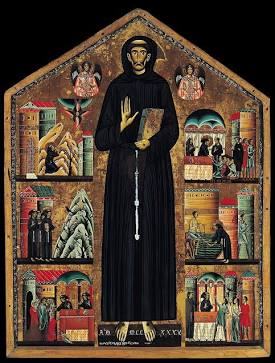
The Life of St. Francis: From Merchant to Mystic
Born Giovanni di Pietro di Bernardone around 1181, Francis was the privileged son of a wealthy Assisi silk merchant. His early years were defined by revelry, vanity, and dreams of knighthood. However, after being captured as a prisoner of war during a battle between Assisi and Perugia—and enduring a long, debilitating illness—Francis underwent a profound spiritual transformation.
He began to hear the voice of Christ calling him to “rebuild my Church.” Francis famously renounced his worldly wealth, stripping off his fine clothes in the public square to return them to his father, and embraced a life of radical poverty. Through his profound love for the Eucharist, his deep reverence for creation, and his radical identification with the poor, Francis became a living mirror of Christ.
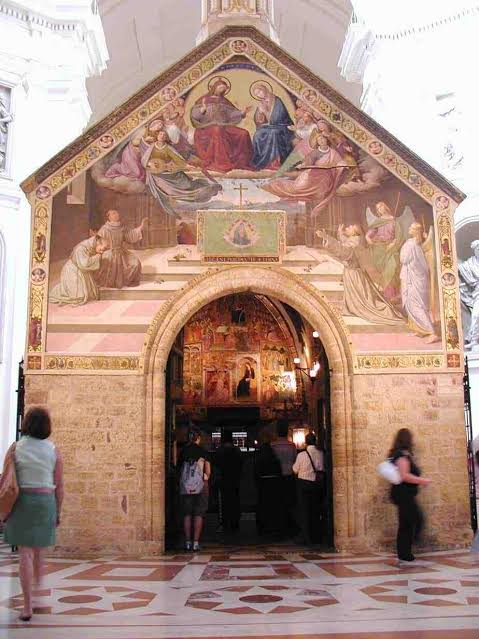
By the time he died at the age of 45 in the Chapel of the Transitus, located behind the Porziuncola, he had set the world on fire. He left behind a spiritual family that would forever alter the landscape of the Catholic Church.
The Secular Franciscan Order: 800 Years of History
The preaching and joyous example of St. Francis exercised such a powerful attraction that people from all walks of life wanted to follow him. However, many were married with families or held secular jobs they could not abandon. Recognizing their spiritual hunger, Francis found a middle way. In 1221, he established what was originally known as the “Brothers and Sisters of Penance,” a movement canonically approved to allow ordinary laypeople to embrace the Franciscan charism in the secular world.
Throughout the centuries, this “Third Order” became a stabilizing force in medieval society. Because their rule of life forbade them from bearing arms or taking oaths of fealty, Secular Franciscans actively undermined the feudal system of constant regional warfare.
In 1978, Pope Paul VI approved the modernized Rule of the Secular Franciscan Order, transforming the fraternities into an independent, self-governing arm of the Franciscan Movement. The focus remained unchanged: bringing the Gospel to life and life to the Gospel.
The OFS Today: Demographics and Dedication
Today, the Franciscan movement is a vast global family comprising approximately 650,000 members across 110 countries. The Secular Franciscan Order represents a massive, vital contingent of this family.
In the United States alone, the OFS comprises hundreds of active fraternities. Recent 2025 statistics from the national fraternity provide a transparent look at the current landscape:
- Steadfast Presence: The U.S. maintains 534 fraternities, a number that has remained remarkably steady over the last 50 years.
- Aging with Grace: The order is experiencing a demographic shift, with 43% of members aged 61-79, and 21% aged 80 and older (including several centenarians).
- Focus on the Future: While facing the challenges of declining and aging membership, the Order is actively pivoting to tailor outreach to younger generations, ensuring that dynamic fraternities continue to attract new vocations.
Despite demographic shifts, the activity level remains high. From funding disaster relief efforts—such as responding to massive floods in Texas—to participating in global solidarity campaigns, modern Secular Franciscans are not just a prayer group; they are an active engine of charity.
Living the Charism in the Modern World
What does it mean to live as a Secular Franciscan 800 years after the death of the founder? The core instruction of St. Francis remains beautifully simple: to observe the Holy Gospel of our Lord Jesus Christ by following His example. Today, this translates into several highly relevant spheres of action:
- Ecological Stewardship: As the patron saint of ecologists, St. Francis’ vision of a sisterhood and brotherhood of creation is deeply needed today. Secular Franciscans lead the charge in their parishes in answering the call of Laudato Si’, treating the environment not as a resource to be exploited, but as a sister to be protected.
- Peacemaking and Reconciliation: In an increasingly polarized society, Secular Franciscans are called to be bridge-builders. They emulate Francis, who famously orchestrated a reconciliation between the warring Bishop and Mayor of Assisi shortly before his death.
- Servant Leadership in the Parish: Secular Franciscans are the lifeblood of local dioceses. They are found serving as Extraordinary Ministers of Holy Communion to the sick, teaching religious education, running St. Vincent de Paul food pantries, and acting as the hands and feet of Christ in their neighborhoods.
As the Church reflects on the 800th anniversary of St. Francis’ transition into eternal life, the Secular Franciscan Order stands as a living testament to his vision. They prove every day that one does not need to live in a monastery to achieve holiness; the ordinary world—with all its messy, beautiful reality—is the perfect place to build the Kingdom of God.